 Please verify your age
You must be over 18 years or older to view our website
Sorry you are not old enough to enter this site.
Quakers of Kendal & Gawith’s Connection
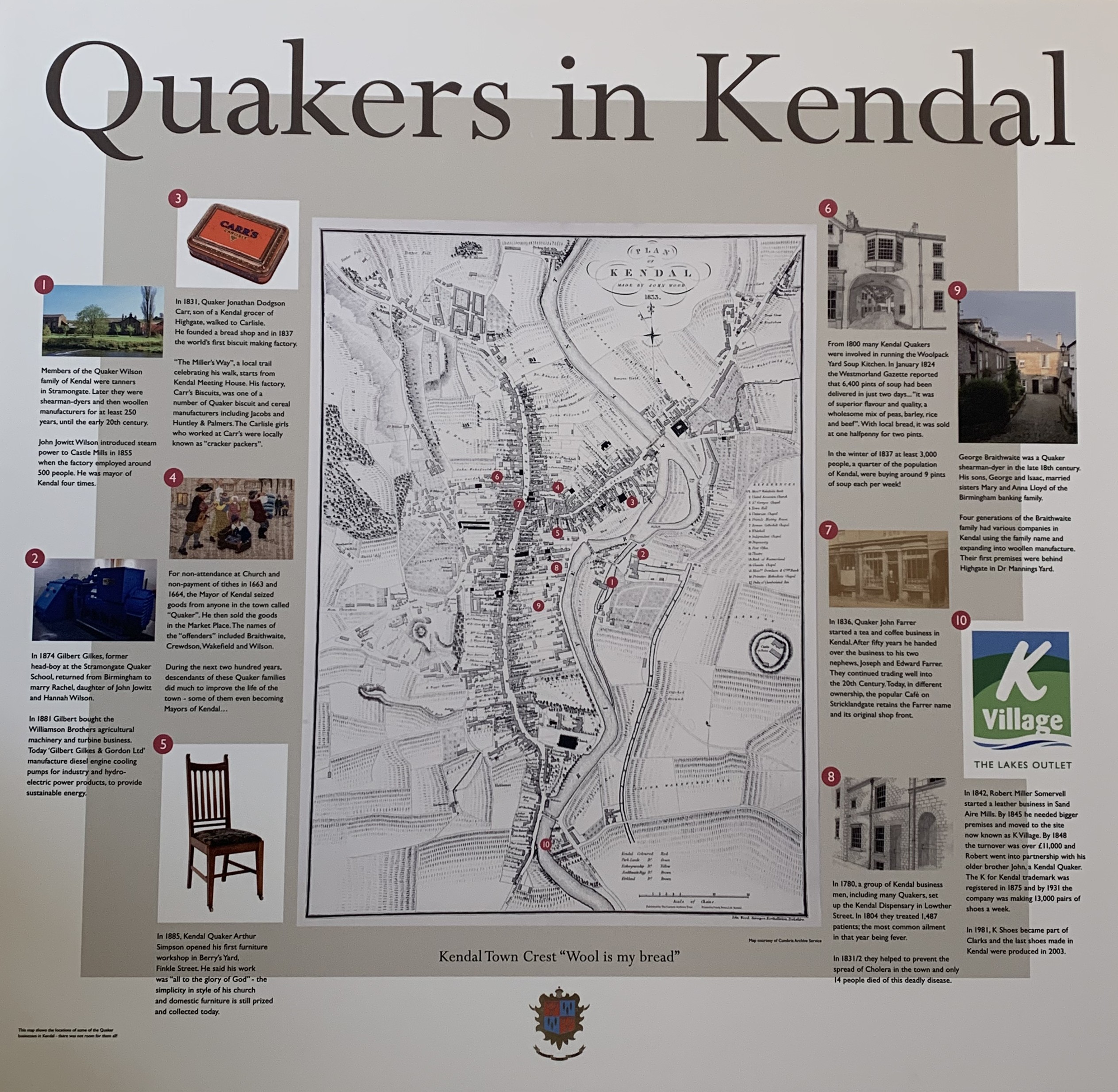
Quakers believe in simplicity, equality, truth, peace. Originally people who belonged to the Religious Society of Friends, they were historically Protestant Christian and played a major role in British industry, particularly during the 18th and 19th centuries.
They were banned from attending university or holding public office, but never the less based on principles of honesty, integrity, and social responsibility, they pioneered industries such as banking (Barclays, Lloyds), chocolate (Cadbury, Rowntree, Fry), and manufacturing (Clarks Shoes), setting high ethical standards and treating employees with fairness.
There have been Quakers in Kendal, since the man held as the founder, George Fox visited in the 17th century.
Quakers owned many of the prominent industrial building and companies in Kendal. Castle Mills, just over the river from the old Lowther Street factory was owned by the Wilson family, well known Quakers. Gilbert Gilkes married one of the Wilson daughters and Gilkes still operates from the same site. The Somervell brothers started K Shoes and both married into prominent Quaker families. In 1981, the Clark family, also Quakers, and took over the shoe manufacturing industry in Kendal.
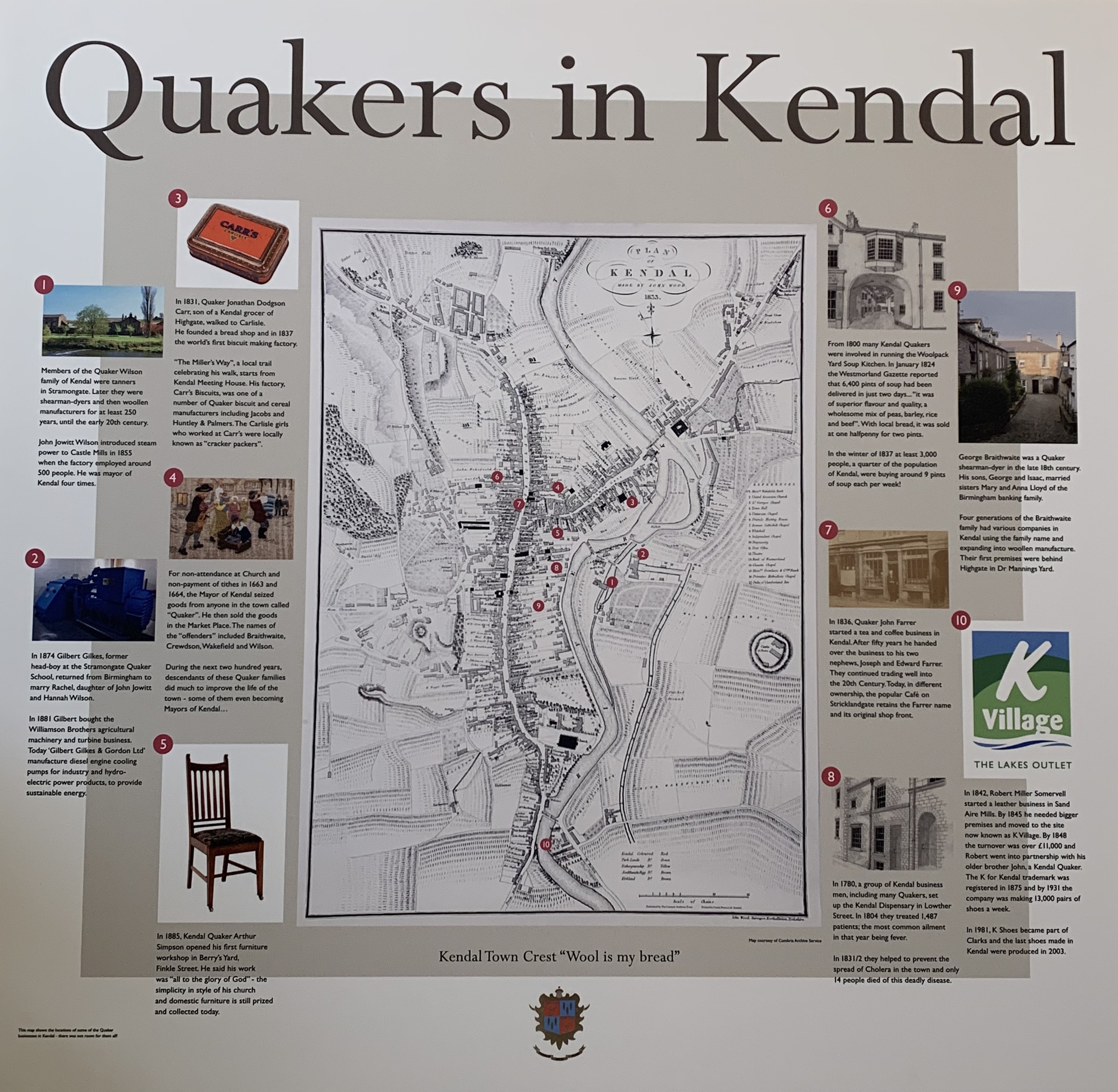
In 1780 a group of Quakers set up a dispensary in Lowther Street, treating thousands of people over the years, mostly for fever and Cholera. The poor of Kendal, Kirkland and the local workhouse were given access to doctors and surgeries for free with the local apothecary being paid £80 a year to make up medicines.
The dispensary at Lowther Street was open from 1783 until 1855 and was probably responsible for Kendal having the lowest recorded death numbers from the Cholera outbreak in 1831/32. It treated over 29,000 people in that time.
Whilst I have no actual evidence currently for how the Gawith’s became Quakers, it seems likely that once Thomas Harrinson (II) bought and moved into the property at 27 Lowther Street, ties were possibly made then. It was Thomas Harrinson (II) ‘s daughter, Jane that married Samuel Gawith 1st. Or maybe Thomas Harrinson was already a Quaker and was involved in the set up of the dispensary before buying the property.
Quaker literature has the front square window as being the dispensary and there are crosses carved into the corner of this, showing it was once a place of medical help.
Other old maps and archived documents show that the old factory did at one point house an apothecary and dispensed medicines, including tobacco products from a large window opening, with people accessing the dispensary from the yard and garden behind the property. Later on this was built on to create a larger machinery shed for production.
Samuel Henry (great grandfather of Rachel) and his wife are buried in the Quaker cemetery in Kendal. His sons attended a Quaker boarding school. Geoff Gawith, whilst a Quaker by birth, opted to join the RAF as a pilot and thus went against the Quaker’s belief in peace and being conscientious objectors. I am not sure how true the story is, but there is a family tale of him turning up to a Quaker meeting in his RAF uniform and causing rather a stir!
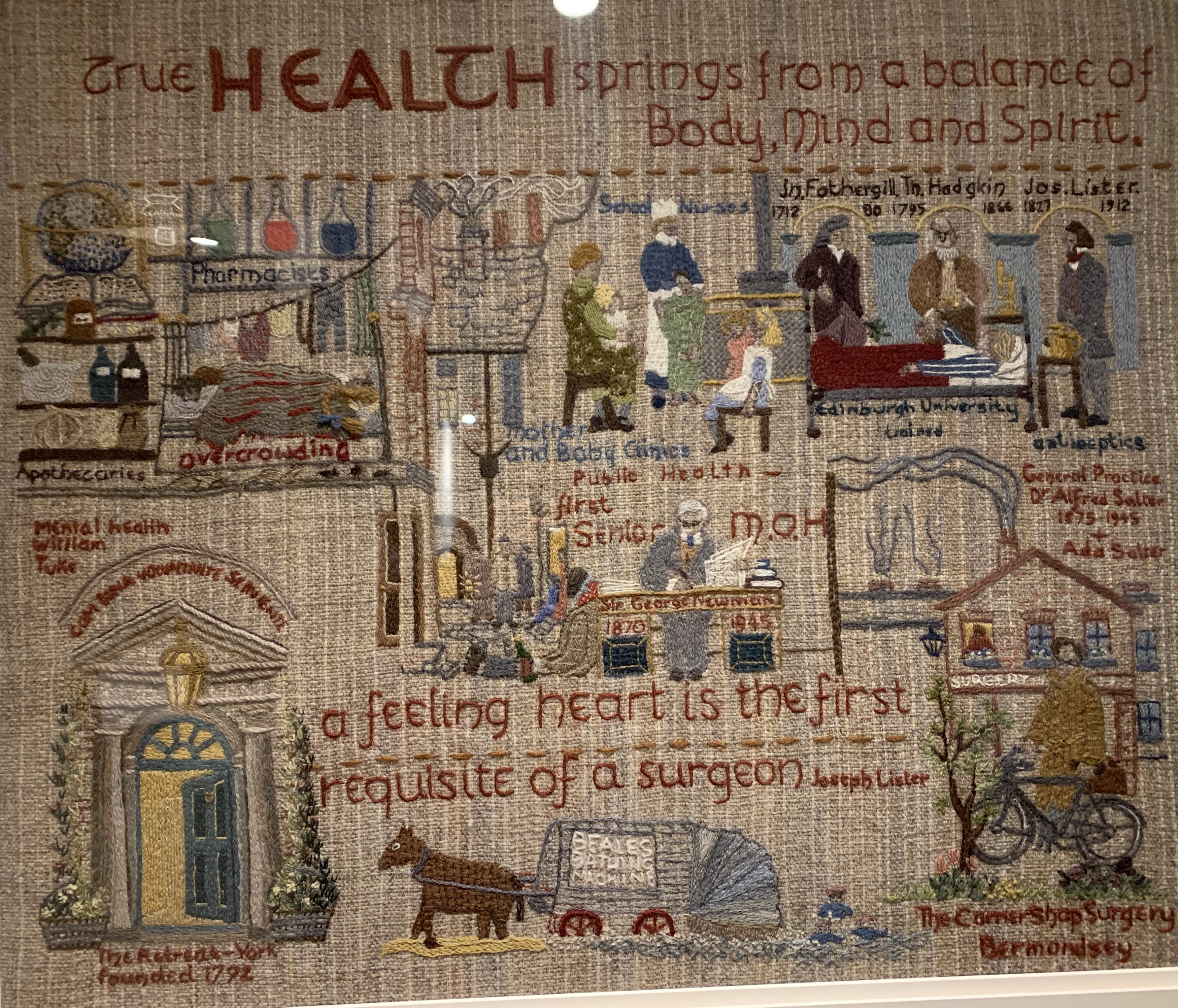
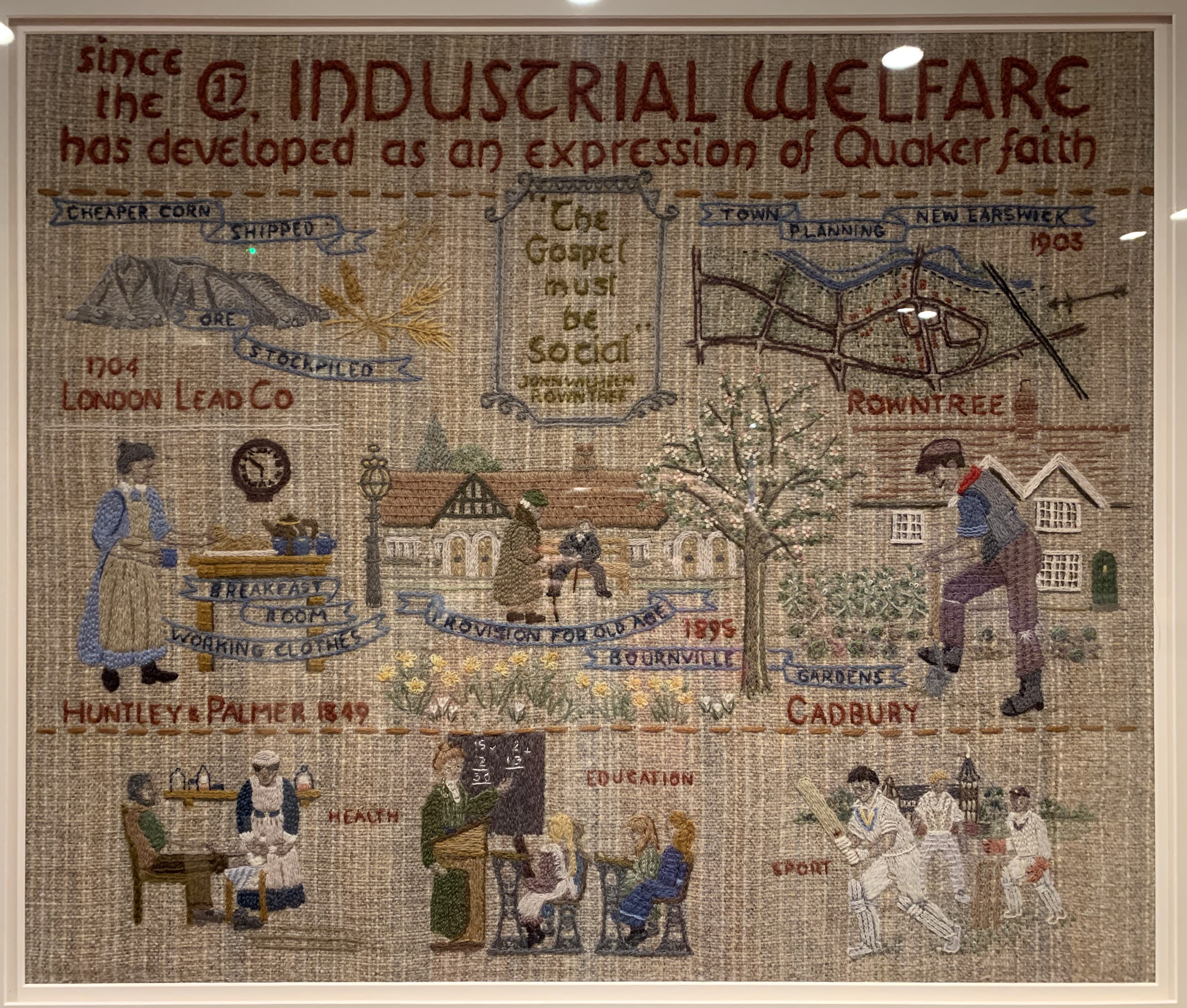
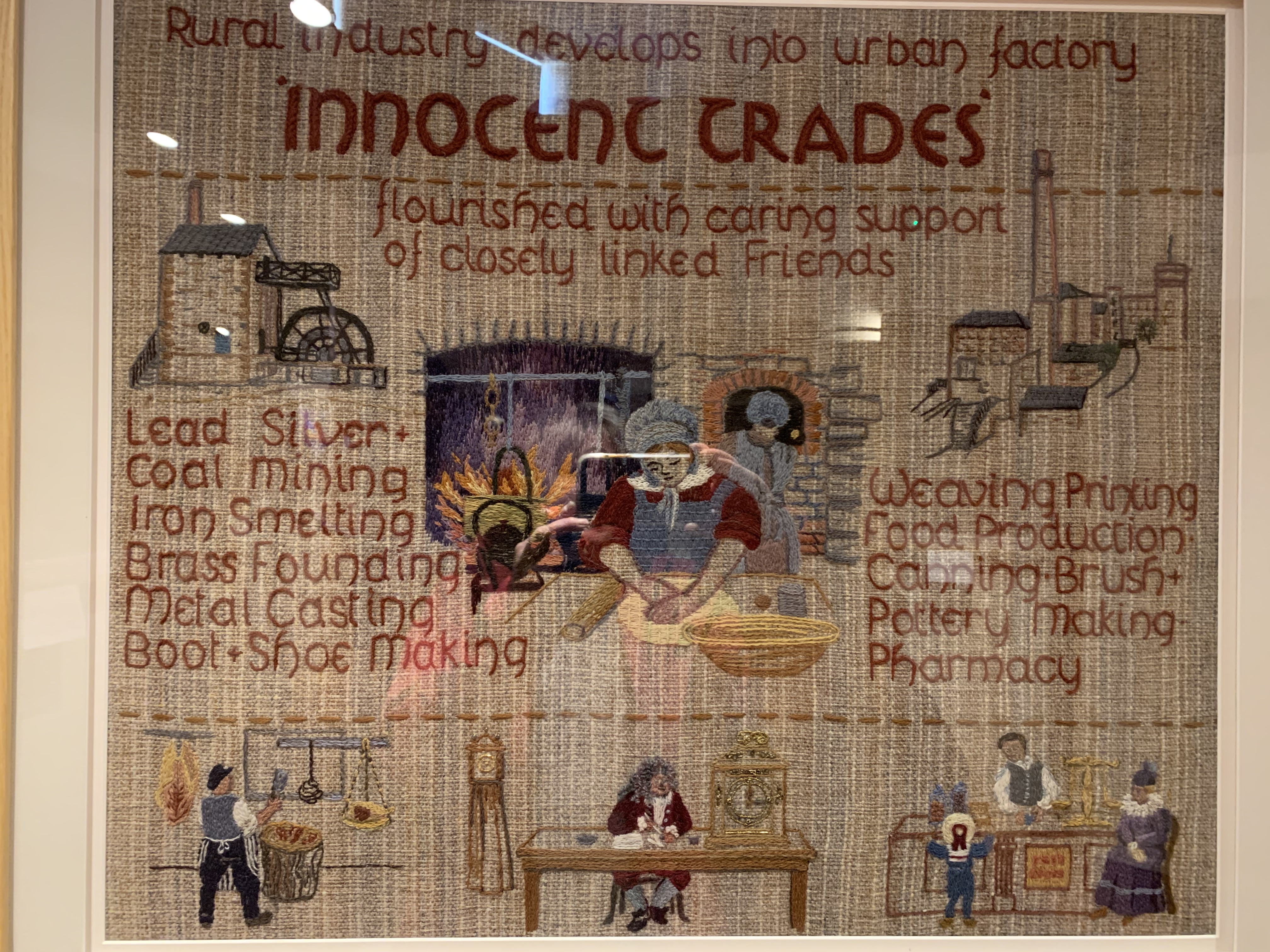
Until December 2025, the Quaker Meeting house in the centre of Kendal, housed the famous Quaker Tapestry. This was started in 1981 and finished in 1996 and contains 77 panels of embroidery work, depicting the history of Quakerism and achievements of the Quakers, as well as persecution.
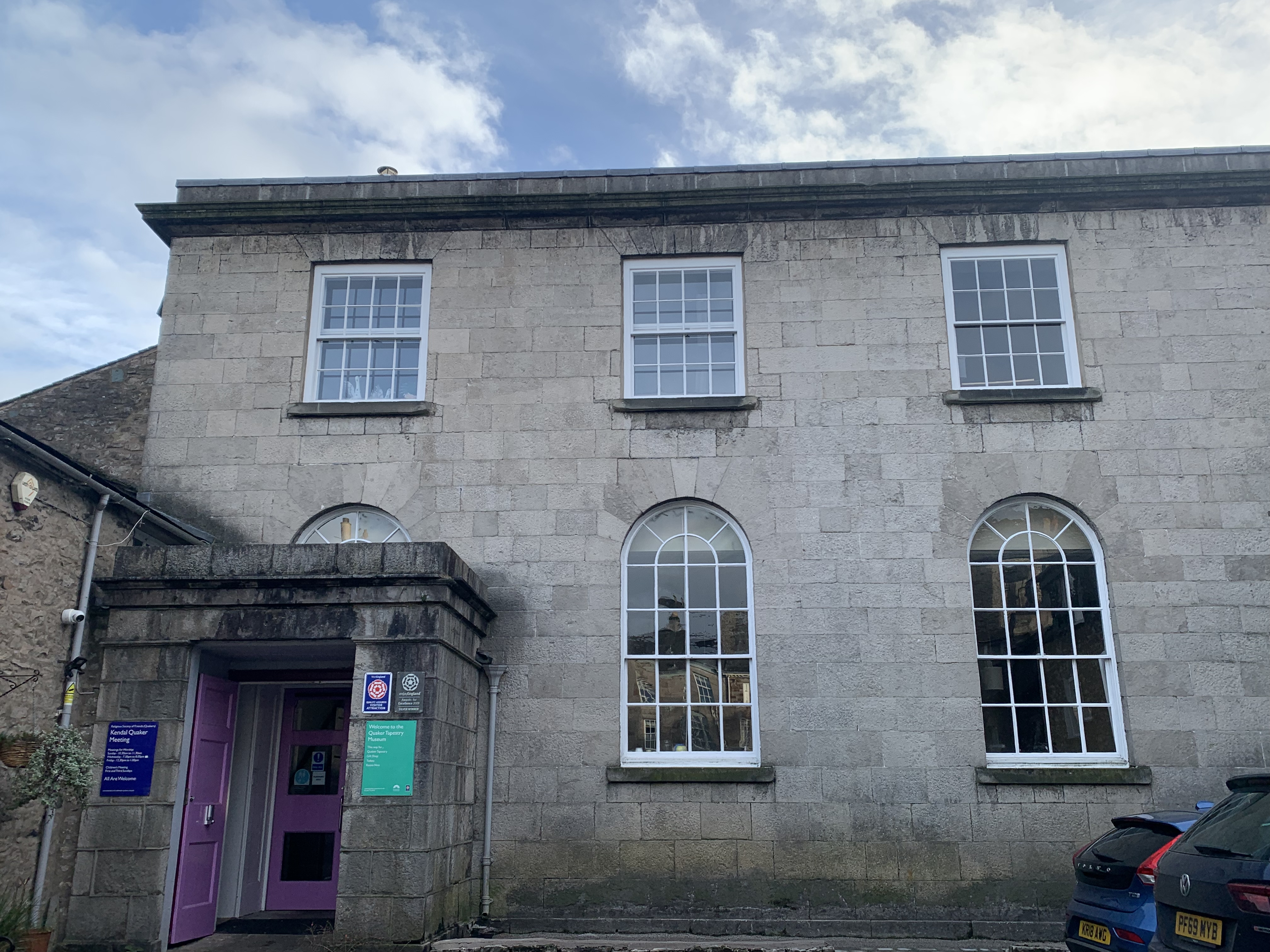
Unfortunately at the end of 2025, the museum closed due to lack of funding and is now no longer open to the public, unless as solution can be found. A few photographs of some of the panels are shown below.