 Please verify your age
You must be over 18 years or older to view our website
Sorry you are not old enough to enter this site.
KENDAL SNUFF
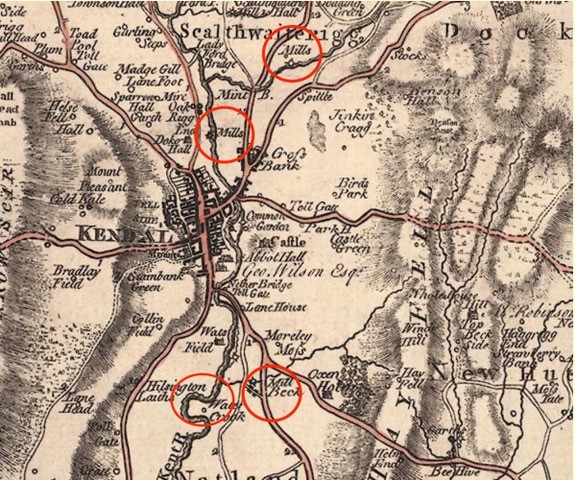
Snuff has a long history in the Kendal area. Going back centuries, Kendal was a manufacturing hub. The Kent Basin, as the area around the River Kent was known, was first used for milling corn, then fulling mills to clean and prepare wool and then as water power really took off in the early 19th Century, these mills were used for a variety of processes, such as gun powder formation and snuff. At the peak of the waterpower age, the wider Kent Basin area had over 90 water driven mills, with nearly half of these being concentrated around the town. Kendal was therefore one of the most heavily industrialised areas in England.
Snuff was first introduced to Europe through Spain and Portugal and made its way to Scotland, where as in England, tobacco was mainly smoked. Well into the 17th Century, tobacco was seen as a medicine, particularly snuff and the first tobacco manufacturers and sellers were physicians and apothecaries. Indeed when Kendal was struck by the plague for the second time in 1623, there were far fewer deaths than when the town had been affected some 25 years early and this was put down to the use of snuff by the people living in and around Kendal. This led to a massive increase in the demand for snuff.
Large shipments of tobacco leaf was being brought across to ports on the north west coast of England such as Whitehaven and Maryport. Kendal was well positioned due to being close to these ports and also on the pack horse route from Glasgow down to more southern reaches of England. Also because of its woollen trade and other industries, Kendal already had a large network of transport routes and customer connections, rivalling many other towns in England. Kendal was the first staging post for pack horses to be stabled and changed, after a day's trip from the ports. Therefore much of the merchandise was often dropped off and sold here. For a while direct tobacco imports were forbidden to Scotland and so the merchants in Glasgow overcame this by using ports in Cumberland, just south of the border.

But the route from the port to Kendal was arduous, passing over the Lakeland fells via high passes. Indeed this route is now one of the infamous roads in the Lake District and not for the feint hearted. Its quite likely that by the time tobacco leaves had been hauled up these mountains, jostling around in panniers on the back of the horses, much of it will have been broken and therefore sold at nominal rates to Kendal traders, who used this tobacco to grind into snuff.
There was a roaring trade exchange in the 18th Century, exporting Kendal cottons for raw tobacco leaf. Kendal Cloth was sent to the plantations in the Americas in return for tobacco. Kendal's love affair with tobacco grew from the 17th Century, starting with small individual snuff manufacturers, grinding snuff using hand operated mortars. But by the early 19th Century there were 7 snuff mills in the vicinity of the town and the fame of Kendal Brown and Kendal Rappee snuff eclipsed that of any of the other of Kendal's famed products. The tobacco and snuff trade far outweighed the trade in leather and wool during this period with 160 tonnes being cleared through the bonded wearhouse in the c.1900.
Gawith Snuff…..The Start
Its likely Thomas Harrison already had an interest in the snuff business, and knew something about milling, when he travelled to Glasgow in 1790 to learn about large scale and mechanised snuff production. A couple of years later he arrived back in Kendal with the famed ‘Kendal Brown’ recipe and equipment and knowledge to make snuff. The incredible feat of transporting this machinery made of oak beams and cast iron gears and cogs should not be over-looked. It's thought the machinery weighed somewhere in the region of 50 tonnes and was transported by horse and cart over the fells from Scotland to Kendal.
There it was installed in the old water powered mill, just outside of Kendal at Mealbank. Thomas Harrison stored the ground tobacco at his premises in the centre of Kendal, where he then flavoured it, packed it and sold it. A short while later he teamed up with a chemist called Thomas Brocklebank.
The first snuff produced was the famous “Kendal Brown”, which remains one of the most popular 230 years later. The term ‘original’ was put on the label years later, after many other companies started to try and copy the famous blend, but it was Samuel Gawith's grandfather (by marriage) that created and produced the first and original Kendal Brown snuff.
Thomas Harrison's son, also called Thomas was passed the business and it was his daughter Jane that married Samuel Gawith, who would inherit the snuff and tobacco manufacturing business that would become Samuel Gawith.
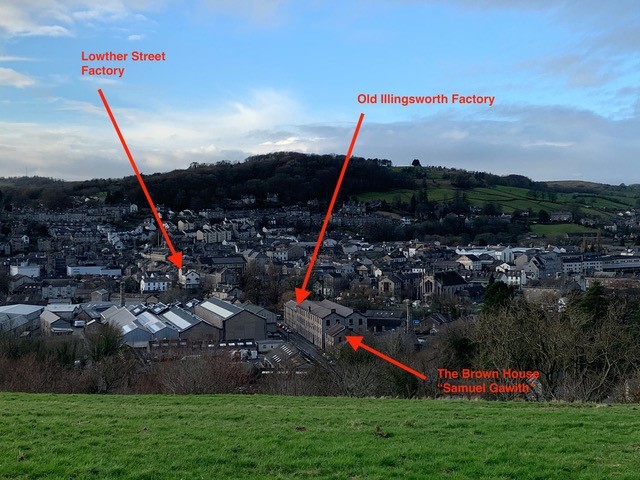
There was at one time three Snuff factories in Kendal - Gawith Hoggarth & Co, Samuel Gawith and Illingsworths and all three started from the same origins.
Samuel Gawith Snuff
Later on when brothers, Samuel (II) and John Edward Gawith dissolved their tobacco manufacturing partnership in 1878 and Samuel opted to retain the snuff grinding mill at Mealbank, he built the Kendal Brown House, named after the famous Kendal Brown snuff. As the years passed, Samuel Gawith expanded into pipe tobacco and also cigarettes and cigars for a short period.
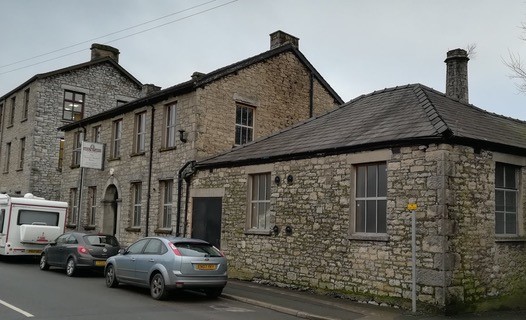
World War 1 gave an increased demand for tobacco, particularly for snuff and after the war, Samuel Gawith was ready to expand. A brand new factory at the north end of Kendal, and all the milling machinery from the Mealbank mill was moved there to be powered by electric and not water. There were plans for a shop as well but this never seems to have come to fruition. The Kendal Brown House was retained as use as the offices and for the final processing and packing of the tobacco and snuff.
And only around 10 years later Samuel Gawith opted to expand the business further, taking on a mill near Penrith, to the north of Kendal. This was already running as a snuff mill so that Samuel Gawith had two snuff production sites for a short while – one in Kendal and one in Penrith. The company invested in new machinery for the site and also acquired ‘Jumbo’ as part of the take over of the mill and equipment at the Penrith site. This was a massive unique grinding machine that operated by two huge rollers crushing the tobacco leaf on the smooth floor of the mortar.
But not longer after this, smaller tobacco firms began to struggle. There were a lot of mergers and cigarettes became more popular with larger tobacco companies running gift coupon schemes to encourage people to buy their products . Therefore, as a consequence of this and just a couple of years after buying their second mill, Samuel Gawith opted to give up both the new Sandes Avenue factory in Kendal and the mill at Penrith. The Kendal Brown House was extended so it could incorporate all the machinery from both sites and in 1937 the original machinery from Scotland was once again dismantled and re-assembled at the Kendal Brown House along with the milling machinery from the Penrith premises.
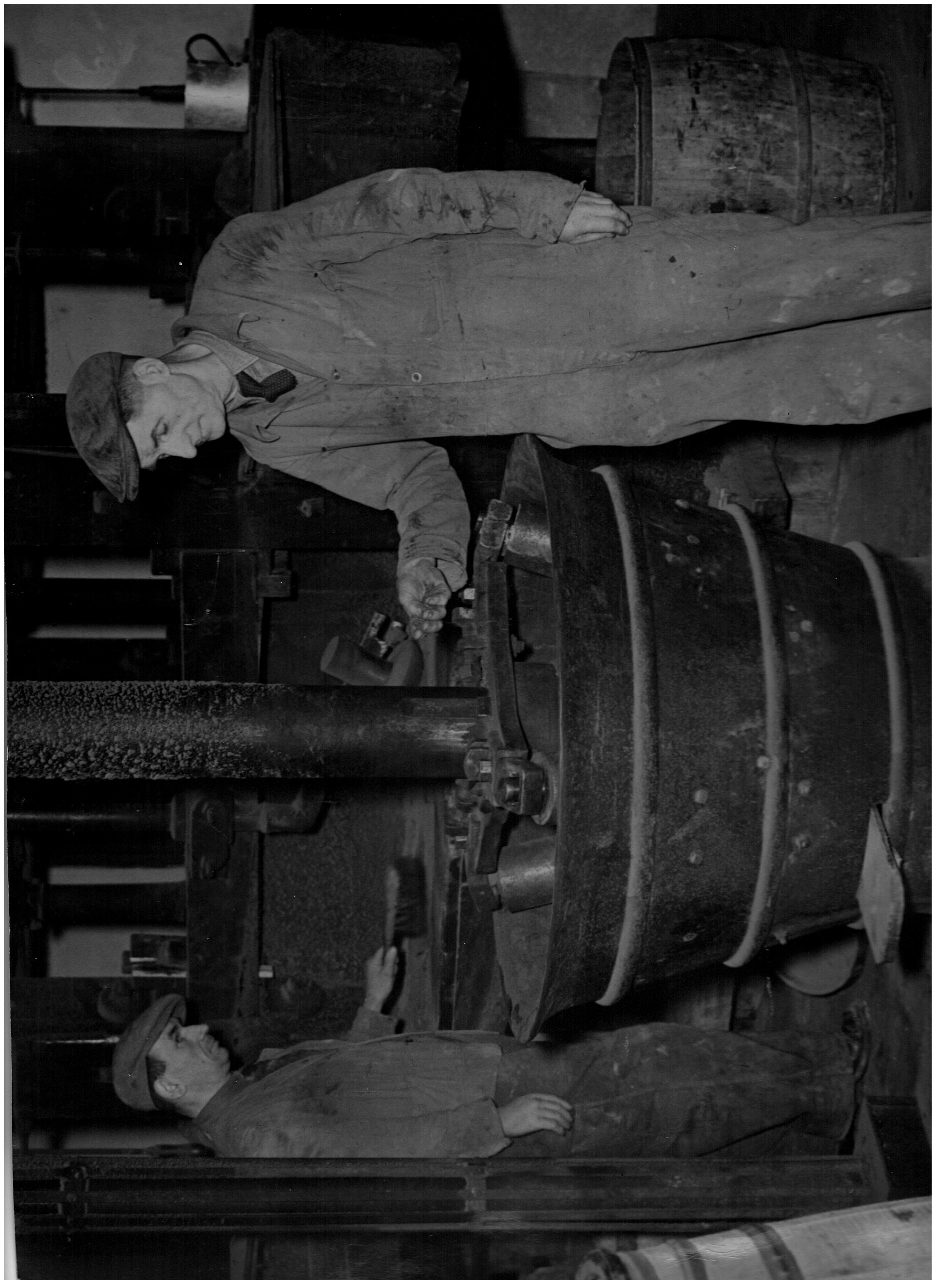
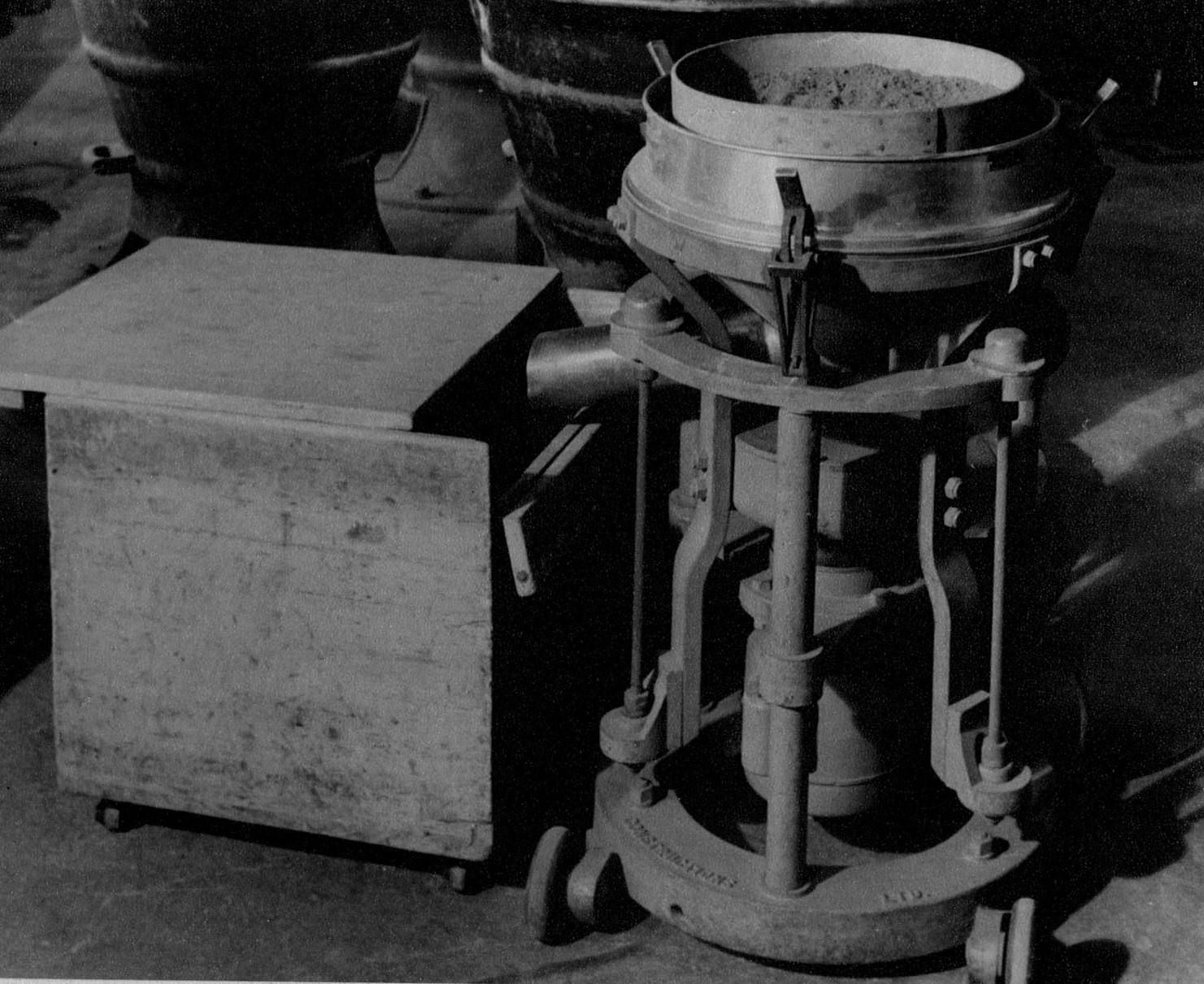
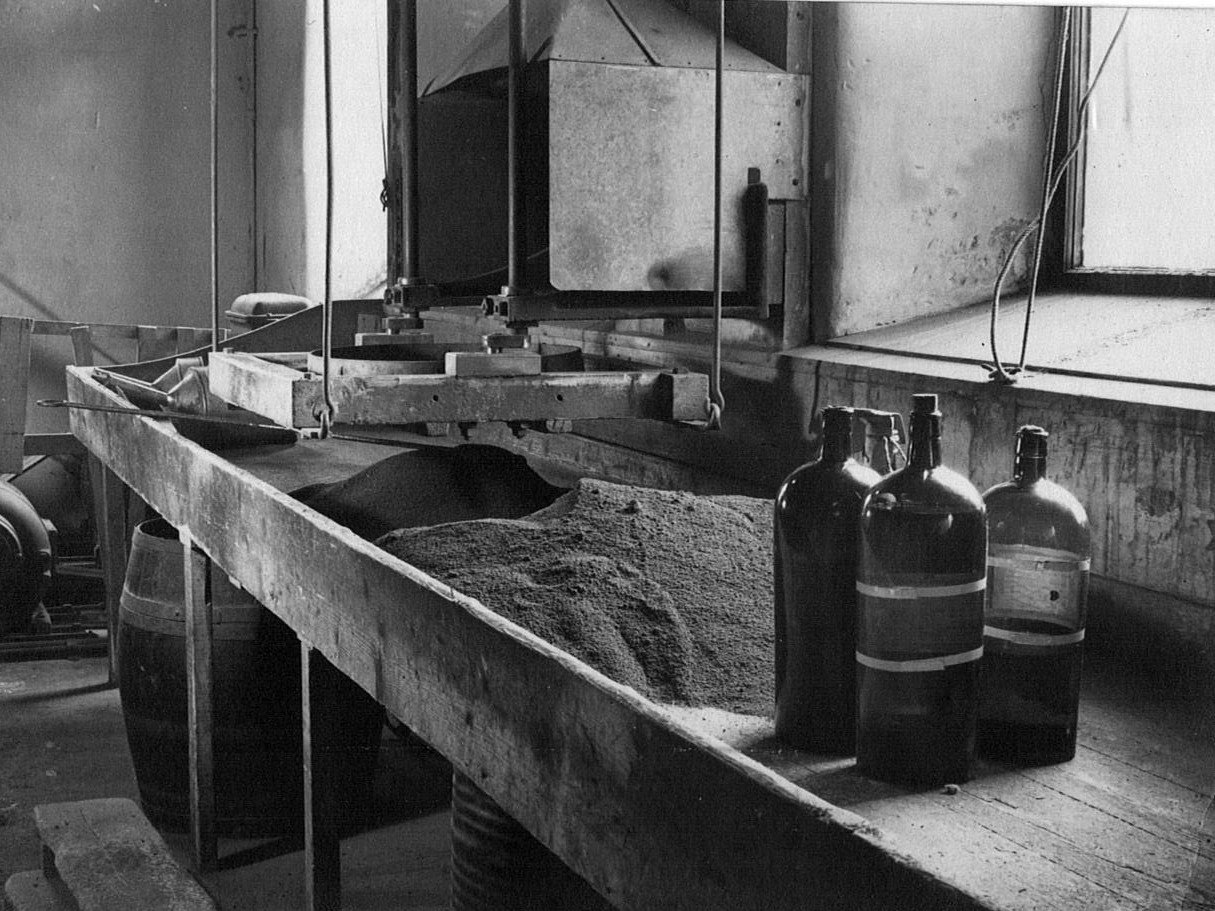
In the 1920’s Samuel Gawith made some 65 different brands of snuff including Doctor Verey’s, Golden Glow, After Glow, Mastiff and of course variations of the Kendal Brown.
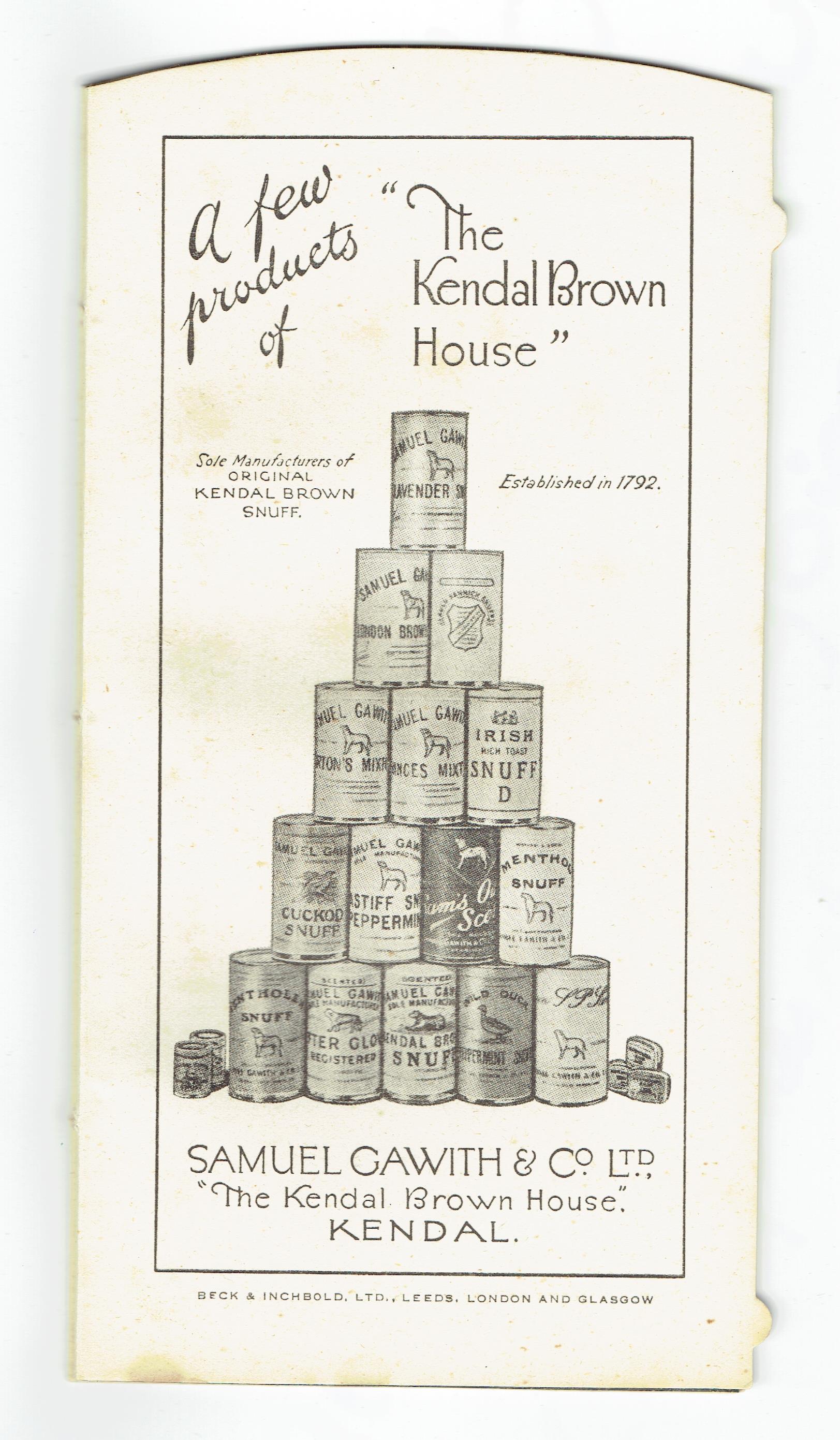
Whilst Samuel Gawith did branch out into pipe tobacco production again, making some loose tobacco and twist, snuff remained the pride of the company and in the 1980’s they were still making 57 different varieties. A number of their more popular snuffs are now also produced as pipe tobaccos, topped with the same flavourings such as FireDance and Celtic Talisman.
Gawith Hoggarth & Co Snuff
At the same time as Samuel Gawith was producing snuff at their mill on the north side of Kendal. Gawith Hoggarth & Co had purchased a watermill on the edge of the south side of Kendal, where snuff was ground until 1991.
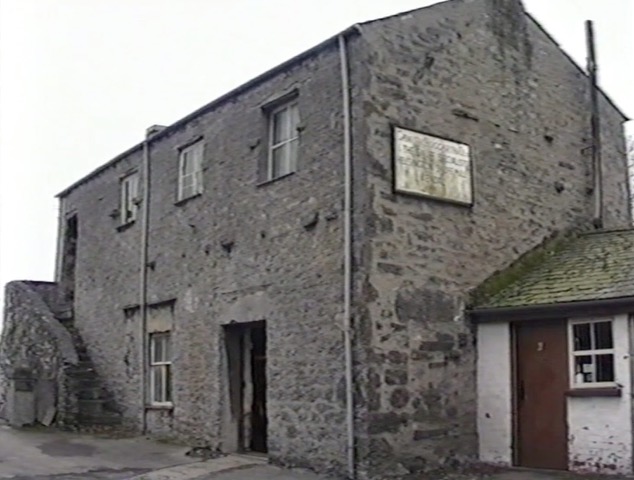
The millrace coming off the River Kent drove the wooden waterwheel which powered the cog-wheels, shafts, pestle arms and sifters so that the tobacco leaf was ground and sieved. The machinery speed was controlled by a lever allowing more or less water through the sluice gate. There were two different grinding processes - pestle and mortar for more coarse, damp snuff and revolving drum mills for finer drier snuff.
The mill was run by two men and only ever stopped if the river flooded (which was a regular occurrence in winter) and to clean the millrace. It took several hours to grind a batch of snuff. Leaf would be sourced from many parts of the world, come into Liverpool and to the mill. In later years a bonded warehouse in Kendal would store the leaf. The mill workers started out learning the trade in the factory at Lowther Street before learning to mill and were there for 30 to 50 years. The final miller was Alan Powley who retired in 1991 after 51 years. And with his retirement, the mill was closed down. It no longer met health and safety requirements and was not economically viable to run.
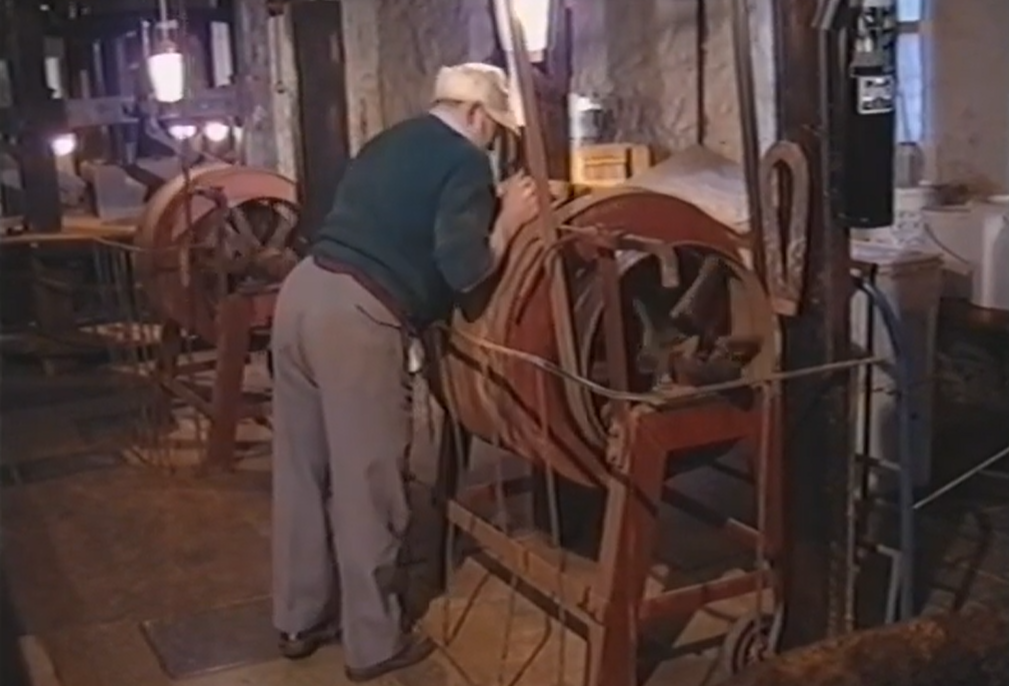
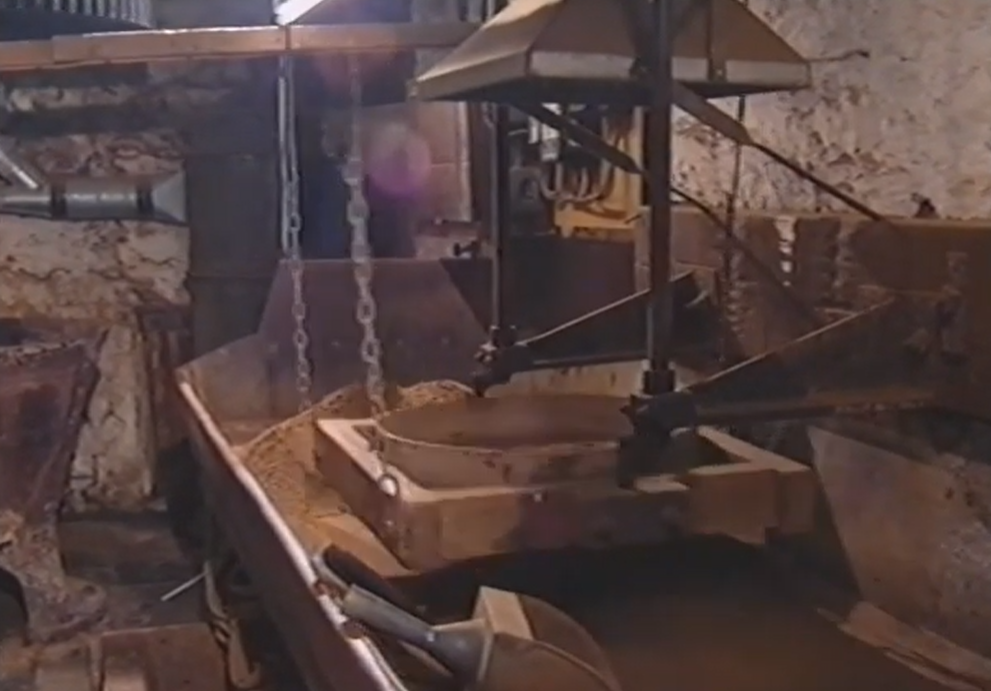
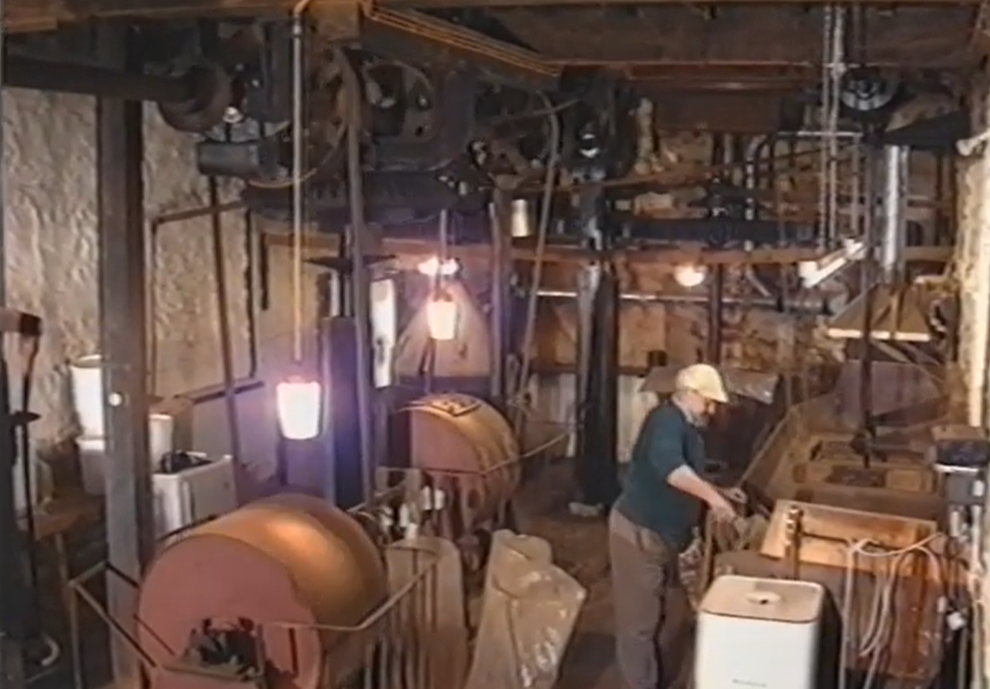
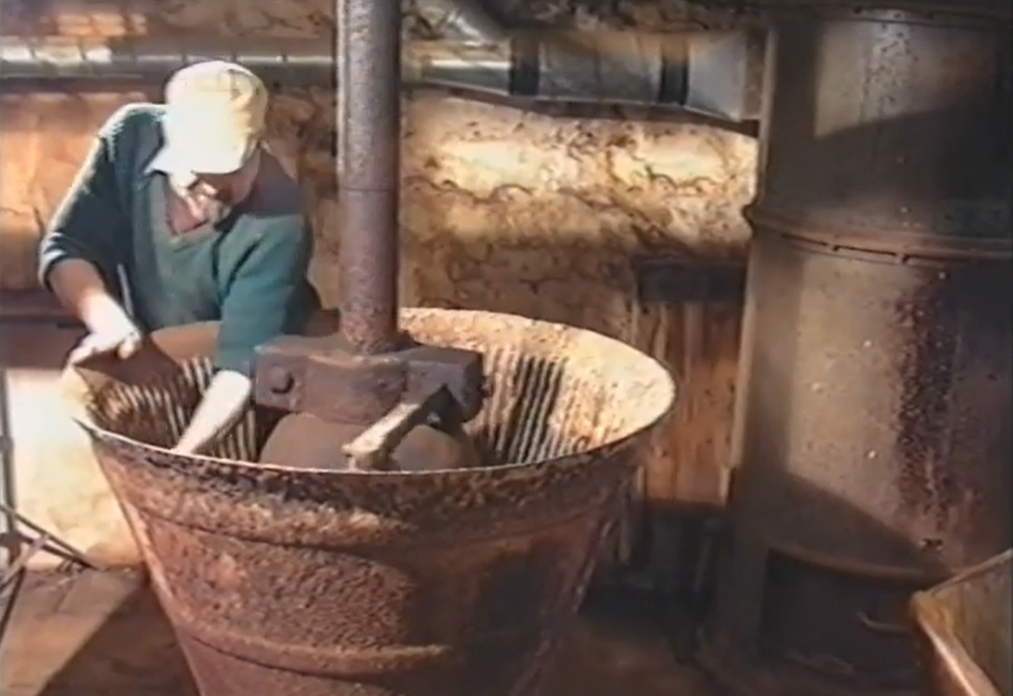
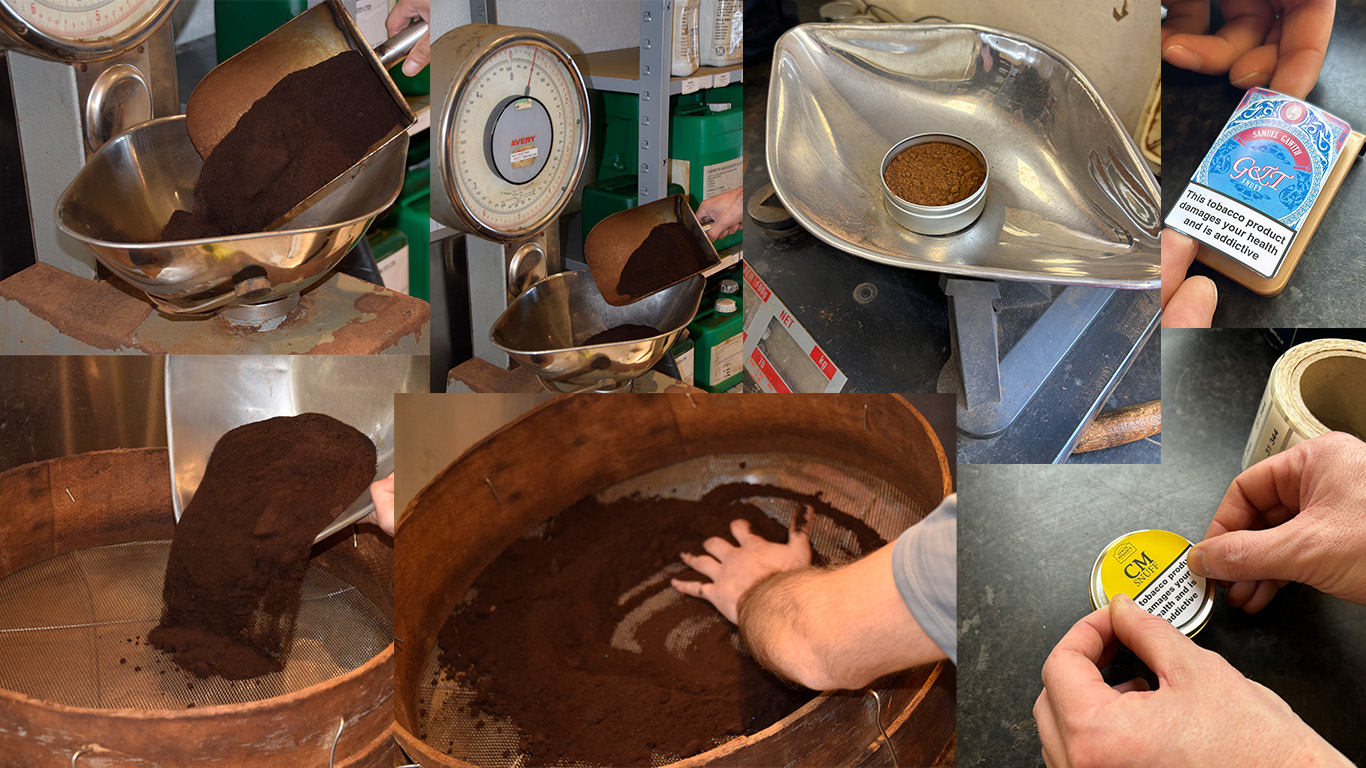
The leaf and stalks would first be dried out by laying it out in a heated floor and turning it. Then it would be taken into the mill and ground down using metal balls in the rotating drum mill. After that the snuff would be sieved and then depending on the type of snuff being made, ground further using pestle and mortars.
There is more on the snuff mill here
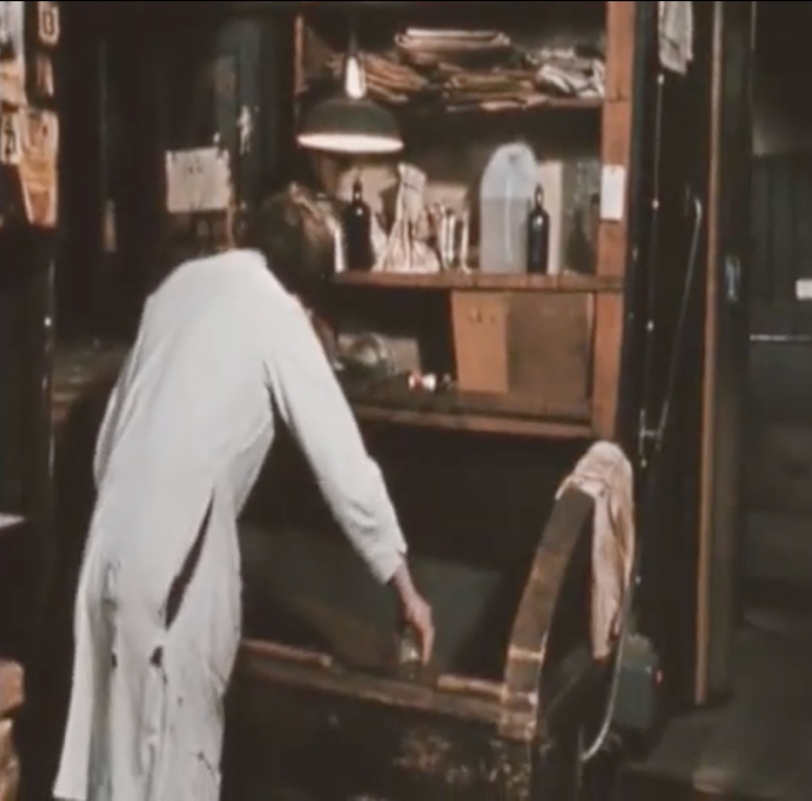
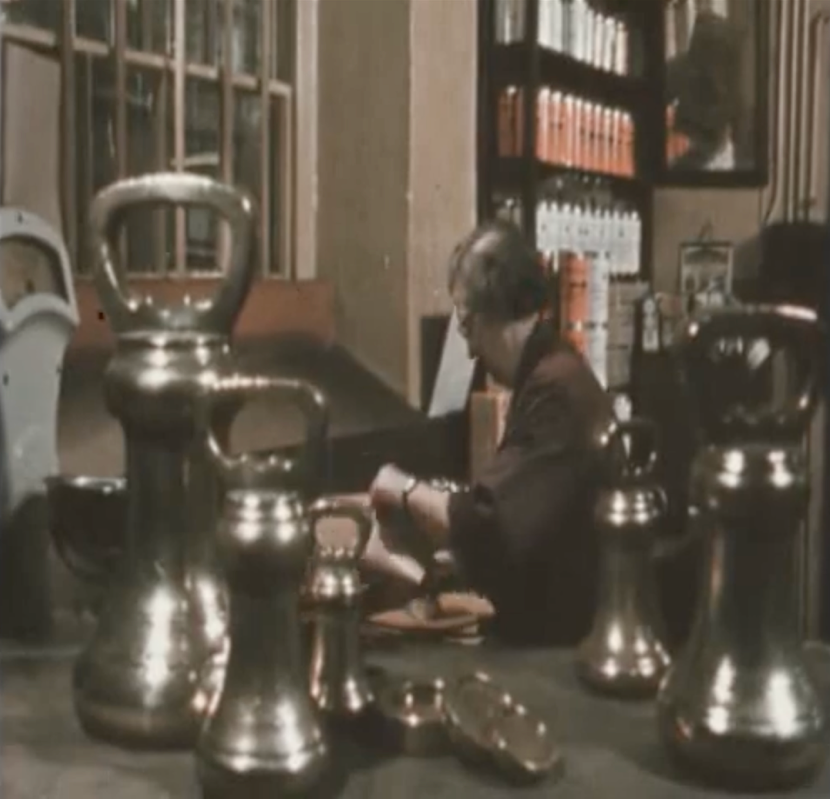
Blending, scenting and packing was done at Lowther Street. There were 9 basic bases made from various leaf compositions to give light, medium and dark snuffs, coarse and fine and then around 60 to 70 finished snuff flavours were made at Lowther Street, mixing various oils together and usually sieving the snuff at least 5 times during the blending and scenting process. The snuff would then be packed into various size tins for sale.
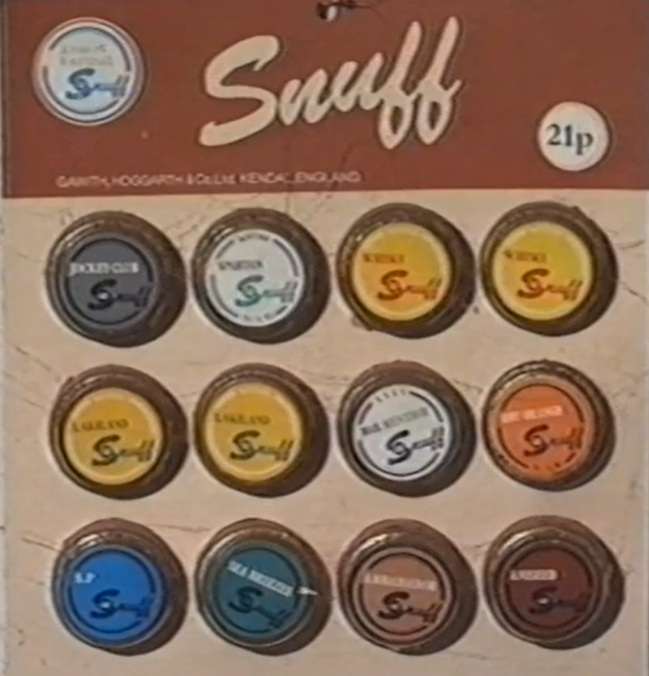
Once carrying an exceptional range of over 60 snuffs, today Gawith Hoggarth & Co still produce a small selection of their most famed and traditional snuffs. These are available in 25g round tins or in 10g plastic tap dispensers and include CM snuff, one of the long time market leaders in mentholated snuffs.
After Gawith Hoggarth took over Samuel Gawith in 2015, there still remains 18 different Samuel Gawith snuff blends, available in 10g dispensers or 25g vacuum sealed round tins.