 Please verify your age
You must be over 18 years or older to view our website
Sorry you are not old enough to enter this site.
Gawith Hoggarth Flakes and Plugs
Flake and Plug tobacco has its origins in preservation of tobacco at sea, as sailors were one of the earliest practitioners of pipe smoking. Most trade ships would carry tobacco as cargo in one direction or the other. But to better preserve the tobacco and prevent it drying out, it was often soaked in sugar water or rum. This then also allowed the leaves to be compressed by hand into smaller packages, a great advantage on a ship, where there was a lack of space. These methods were eventually also adopted on a larger scale by tobacco companies to produce plug tobaccos and later, flake tobaccos, for a more convenient smoke.
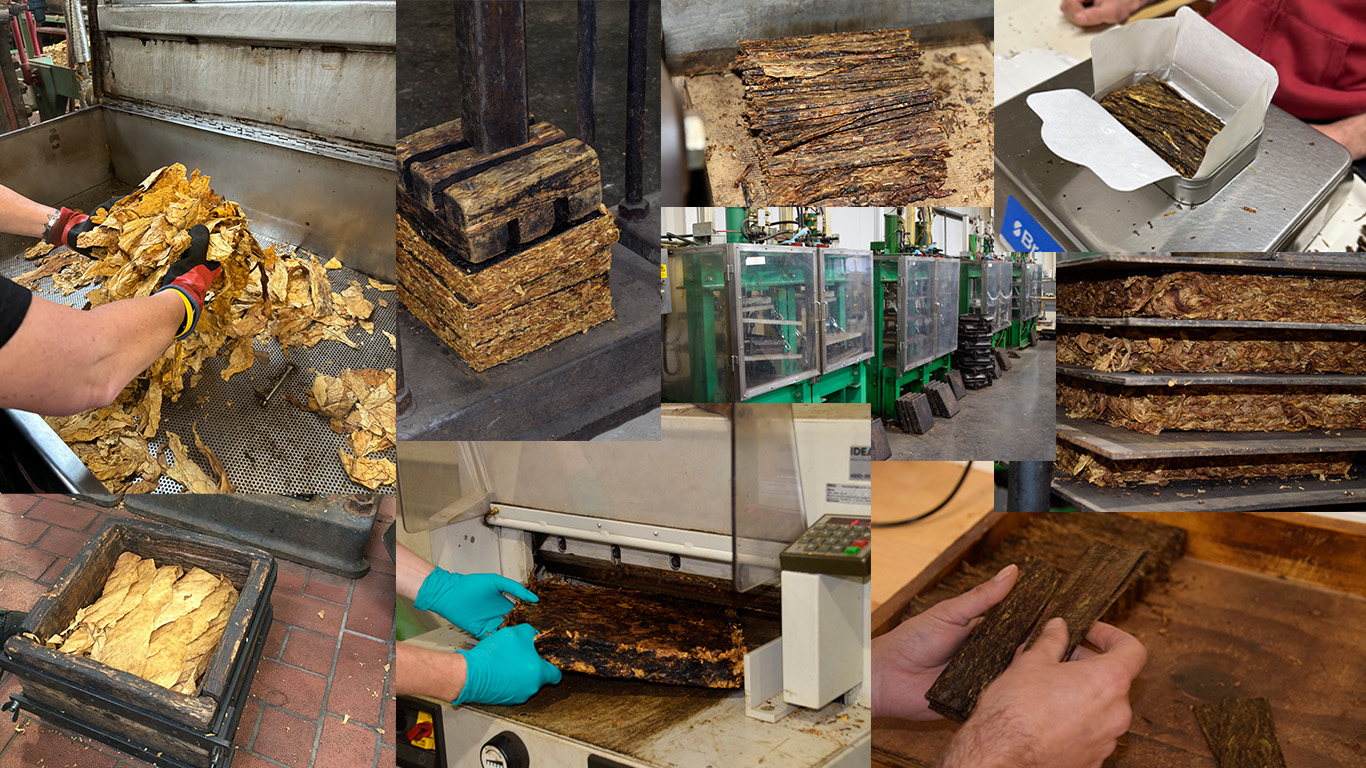
To form the plugs and flakes, leaf is steamed and blended and any scent is carefully added by hand at this stage. The tobacco leaf is then left overnight to rest. Originally the cakes were then formed by placing the leaf into small wooden boxes and standing on them, before being placed into large wooden presses. Now we use the former which is one of the original pieces of machinery to come from the old Kendal Brown house. Two 3kg cakes are placed in the former at any one time, with metal plates between each. Manual pressure is then applied by cranking the metal wheel on top down as far as possible.

Until the 1980’s the flakes and plugs were simply cold pressed for a month, before being cut. In the late 1980’s John Gawith started experimenting at home, cooking the tobacco cakes in the oven to make the cake harder and the blend smoother. This created a far better quality product and so steam presses were introduced to cook the cakes, before electric hot presses were introduced in 1990’s.
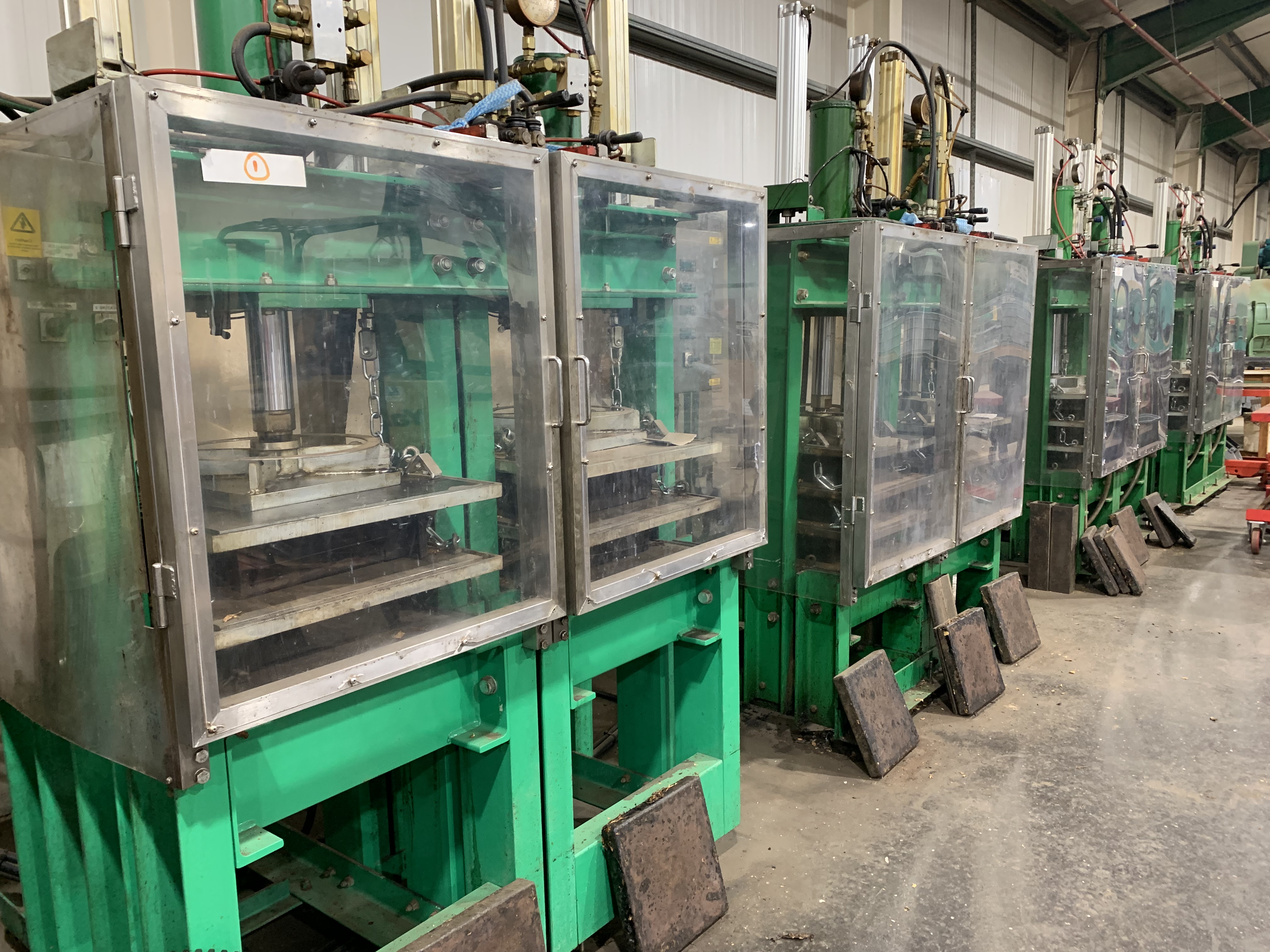
Once the cakes are formed they are then held under pressure still utilising the centuries old massive wooden manual presses and the next day the cakes are cooked under pressure and then allowed to cool over night.
The cakes are then cut to size and their edges trimmed off. At this stage you have a plug tobacco as it is essentially a flake pipe tobacco before it's been cut into flakes. These highly condensed bricks of solid tobacco are then cut into smaller blocks or pieces (cut plug) and then packed by hand.
For flakes, the tobacco cake is sliced into thin flakes using very old guillotine type cutters before being carefully packed by hand. To prepare flake for use in a pipe, most smokers rub it out to a more manageable consistency, whilst others choose to simply roll and pack the chamber with the flake.
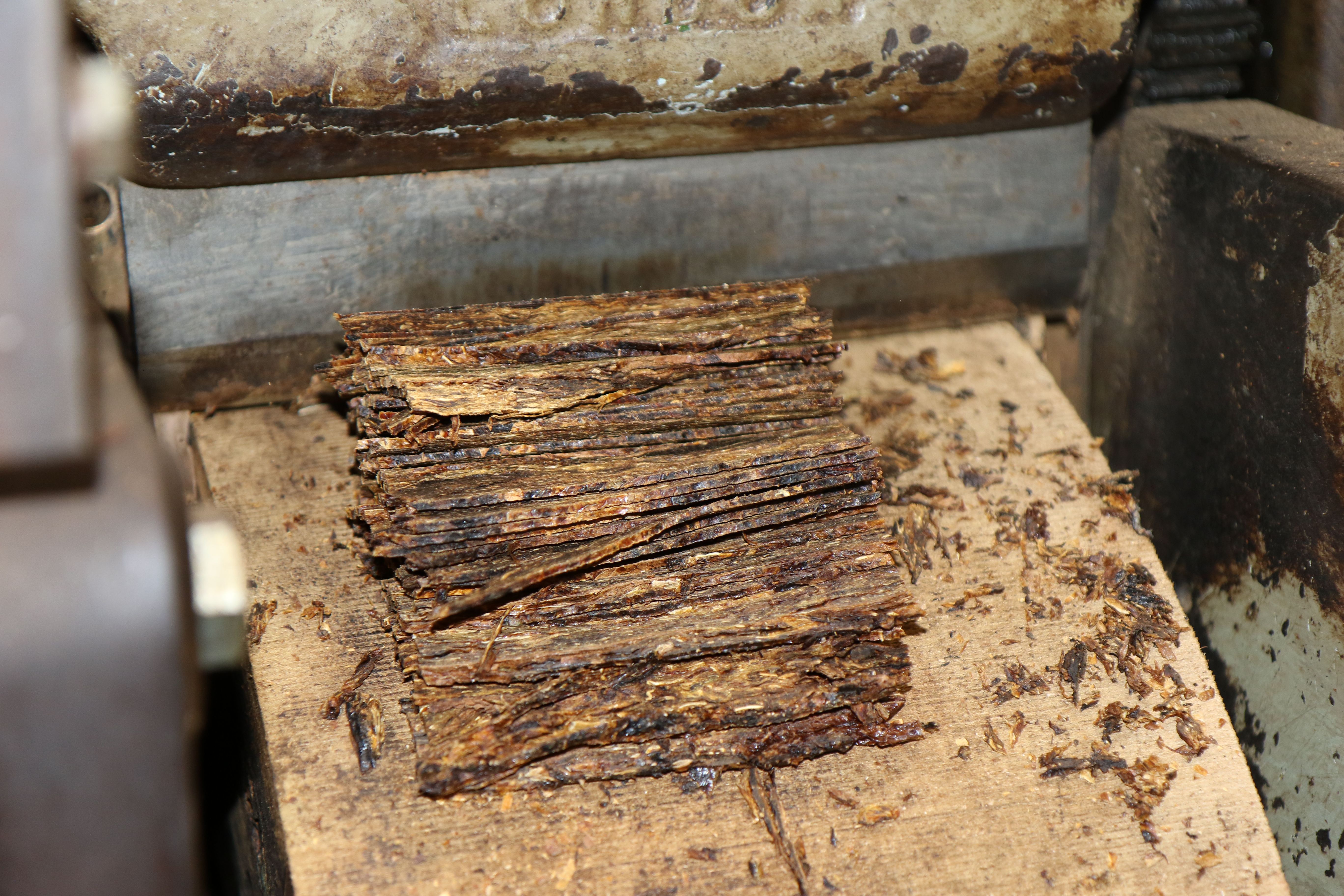
Pressing the whole leaf tobacco and holding it under pressure for a period of time allows the flavour profile of the blend to meld and mature, becoming something different from the individual leaf types, you find in a ribbon-cut tobacco and giving a more robust taste.
The whole process is very time consuming and manual and is limited by the traditional machinery that has been used by Gawiths for many years. Flakes and plugs are produced in small-batch, hand-blended processes and while this may limit Gawith’s production capacity, this is what gives Gawith flakes their superior quality and unique tastes.
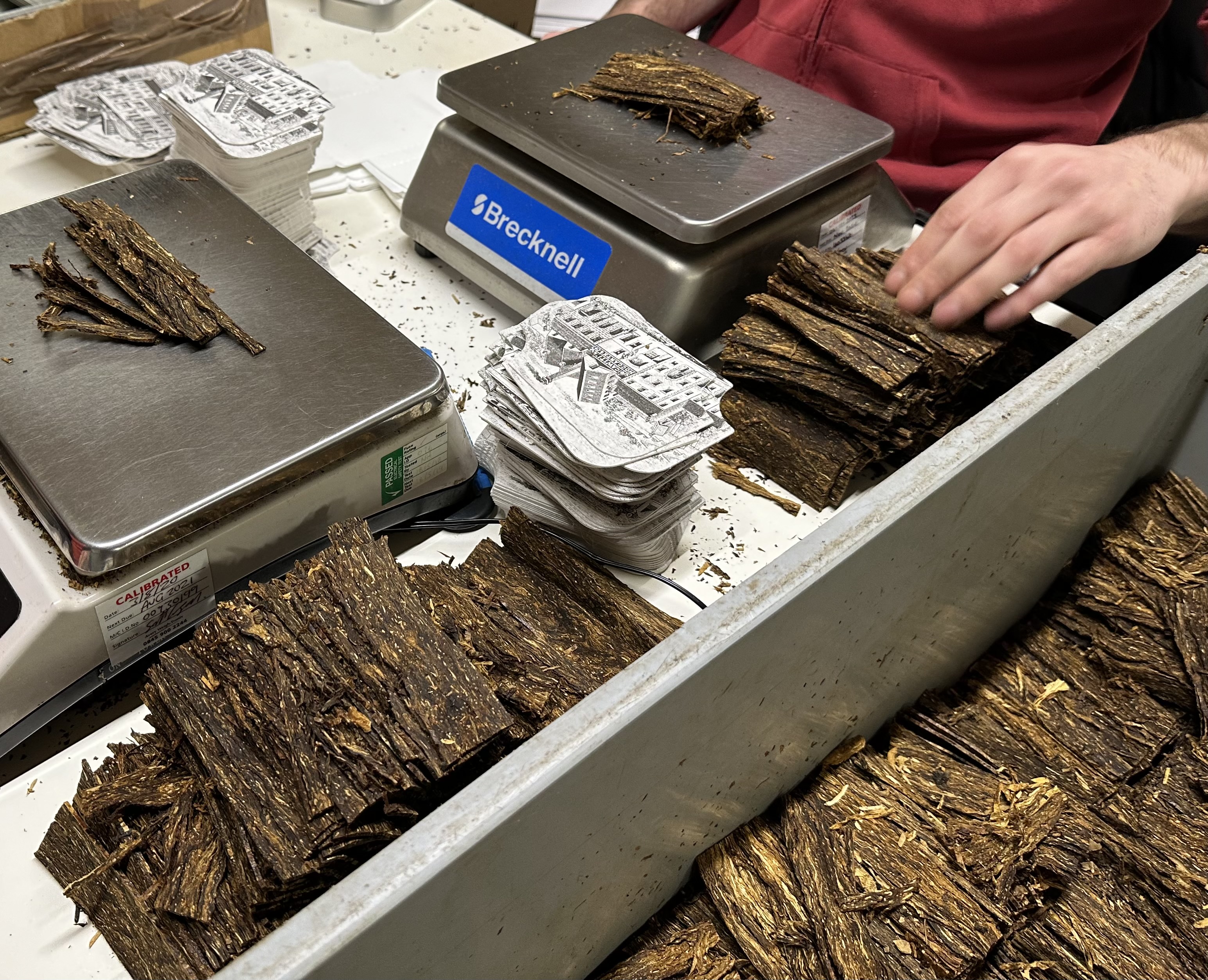
Gawith Hoggarth & Co have been producing plugs and flakes for over a hundred years with Dark plug and flake being one of the first along with Best Brown and Brown Flake. By the early 1930’s the company was making 17 different plugs (bars) and cut cakes and in the 1960’s the repertoire of flakes and plugs expanded to include scented blends. Today Gawith Hoggarth & Co offers 16 different flakes and 4 of its most popular plugs.